1.
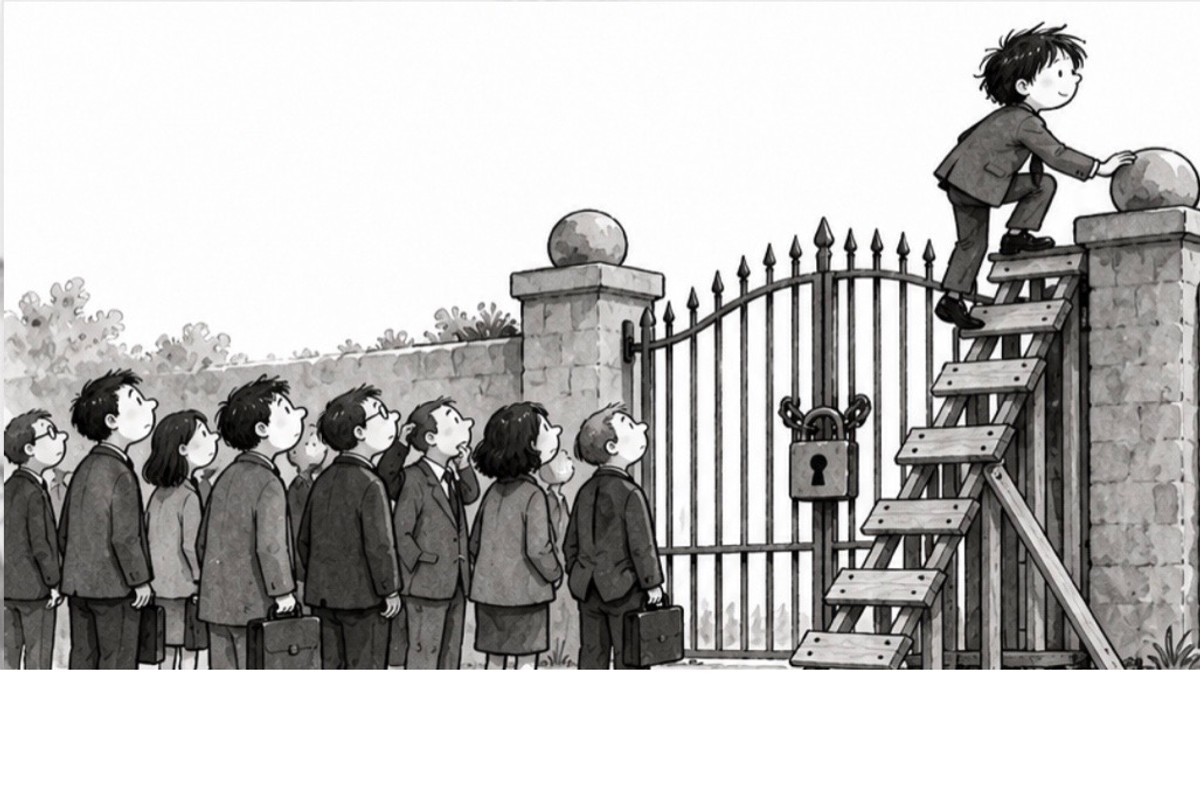
In the 16th century, French philosopher Michel de Montaigne kept a list of what different cultures throughout history thought was normal:
Where hair grows on the right side of the body but is shaved completely on the left side, where women visit the bathroom standing up and men sitting, where spouses are buried alive with their dead partner, where people blacken their teeth because they consider white ones ugly, where one is supposed to kill one’s father at a certain age, where the success of a wedding is how many of the grooms friends the bride can sleep with, and where they boil the bodies of the dead, pound them to a pulp, and mix them with wine before drinking them.
Montaigne used these lists as a reminder that everything society told him was normal – the normal way to grieve, the normal way to dress, the normal way to live -- is just what he happened to be born into, and is often here today, but gone tomorrow.
Pick any behaviour you think is normal. And nine times out of ten, you can find a location or a moment in history that thinks you are weird.
Now, Montaigne died at 59, in 1592 in the South West of France, and his tomb is on display in a museum in Bordeaux. But if we brought him back to life, and upon waking he asked what is considered normal today, here’s the list we could give him:
Normal consumes 17 teaspoons of sugar per day.
Normal has $104,755 in debt.
Normal walks 4,000 steps each day.
Normal spends 90,000 hours of their life in a job they don’t enjoy.
Normal stays indoors for 22.3 hours per day.
Normal spends more time on the toilet than exercising.
Normal hasn’t finished a book in the last 12 months.
Normal experiences under 10 minutes per day in silence.
Normal gets 55% of their diet from ultra processed foods.
Normal will spend 20 years of their life staring at a screen.
If we then told Montaigne that we hid our weirdness, that we copied everyone around us, that we wore the mask of normal until the mask ate our face, he could look us in the eye and say what Dostoevsky said 274 years ago: “The worst sin is that you destroyed and betrayed yourself for nothing.”
2.
Bring to mind a person you admire and tell stories about.
Don’t read on until you have that person in mind.
…
Are they normal?
3.
When you attend the funerals of the people you love, you may notice one thing rarely mentioned in conversations.
Their normal behaviour.
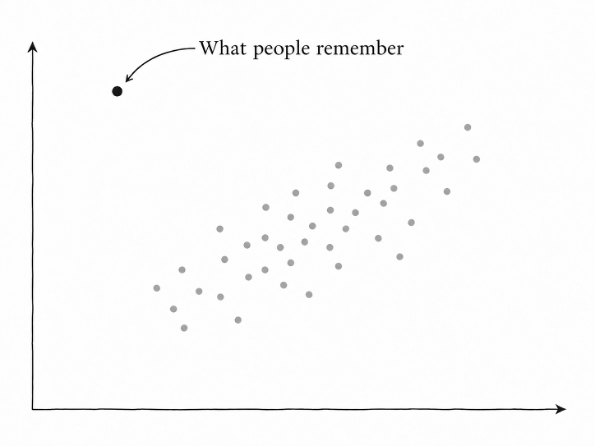
Conversations are filled with the weird and wonderful stories of the individual. The times they broke out of the median distribution of human behaviour and displayed their uniqueness.
The tragedy of normality: We hide our weirdness and act out normal behaviour to be liked by the tribe. But the tribe then forgets our normal behaviour, and only remembers our abnormal behaviour.
Nobody tells stories of when you did the expected, they only tell stories of when you did the unexpected. So, if you’re hiding your weird individualism to make the tribe like you, remember: They’ll soon forget everything you did or said.
Send a hand written thank you letter instead of an email, the initial reaction is “you shouldn’t have”. 12 months later, it’s the only message they remember from the thousands they received that year.
If you ask the dumb question in the meeting, the room may go quiet. Afterwards, two people message you: “Thank goodness you asked”
If you travel across the country for your friend’s father’s funeral, she may say “you don’t have to come”. Years later, it’s the story she tells at your wedding.
It’s not that we should pursue random abnormal behaviours to make people remember us, it’s that we shouldn’t pursue random normal behaviours to make people like us. We shouldn’t trade our weirdness, our uniqueness, our aliveness, to contort ourselves into today’s shape of the day, for an audience that won’t even remember our bland performance a few days later.
Do not forget the most common regret of the dying: I wish I had the courage to live a life true to myself, and not the life others expected of me.
P.S. Life is too short to read bad books.
I’ve put together the list of my favourite rare books. From a 19th century Russian novel about a man who can’t get out of bed until page 50. Or the book on writing I wish I read 10 years ago.
Get the list here —> highagency.com/books
1. If you want a great introduction to Montaigne, start with "How to Live" by Sarah Blackwell.